My Sleep Fix Journal
Wide awake at 4:30am? Your body clock may simply run early.
Most people blame stress or getting older. Scientists call it your chronotype. We've made it simple with four Sleep Colours. Find yours and know what to do tonight.
Most people blame stress or getting older. Scientists call it your chronotype. We've made it simple with four Sleep Colours. Find yours and know what to do tonight.
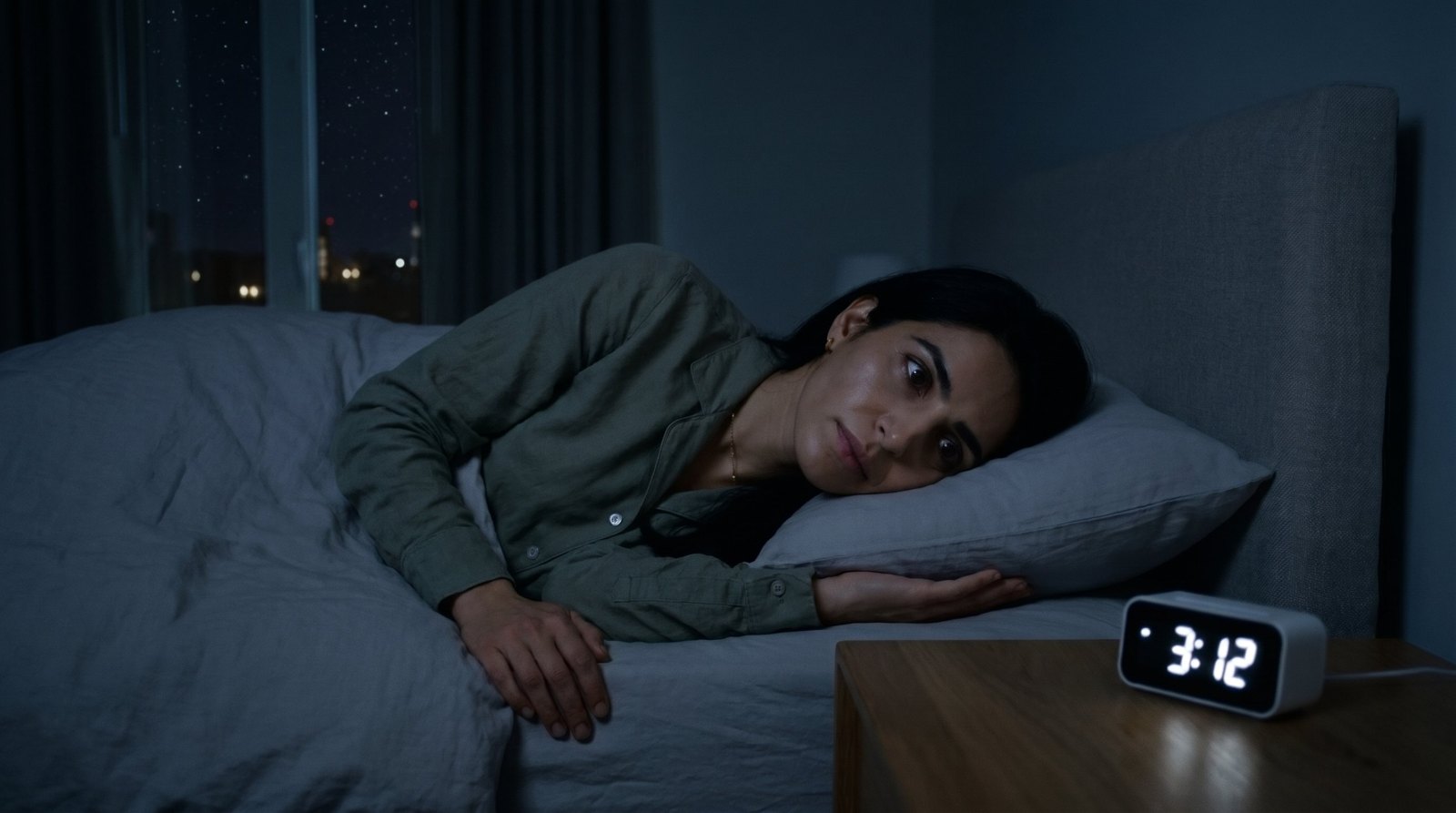
It's 4:30am. The city is still dark. The alarm isn't due for another two hours, and you're wide awake.
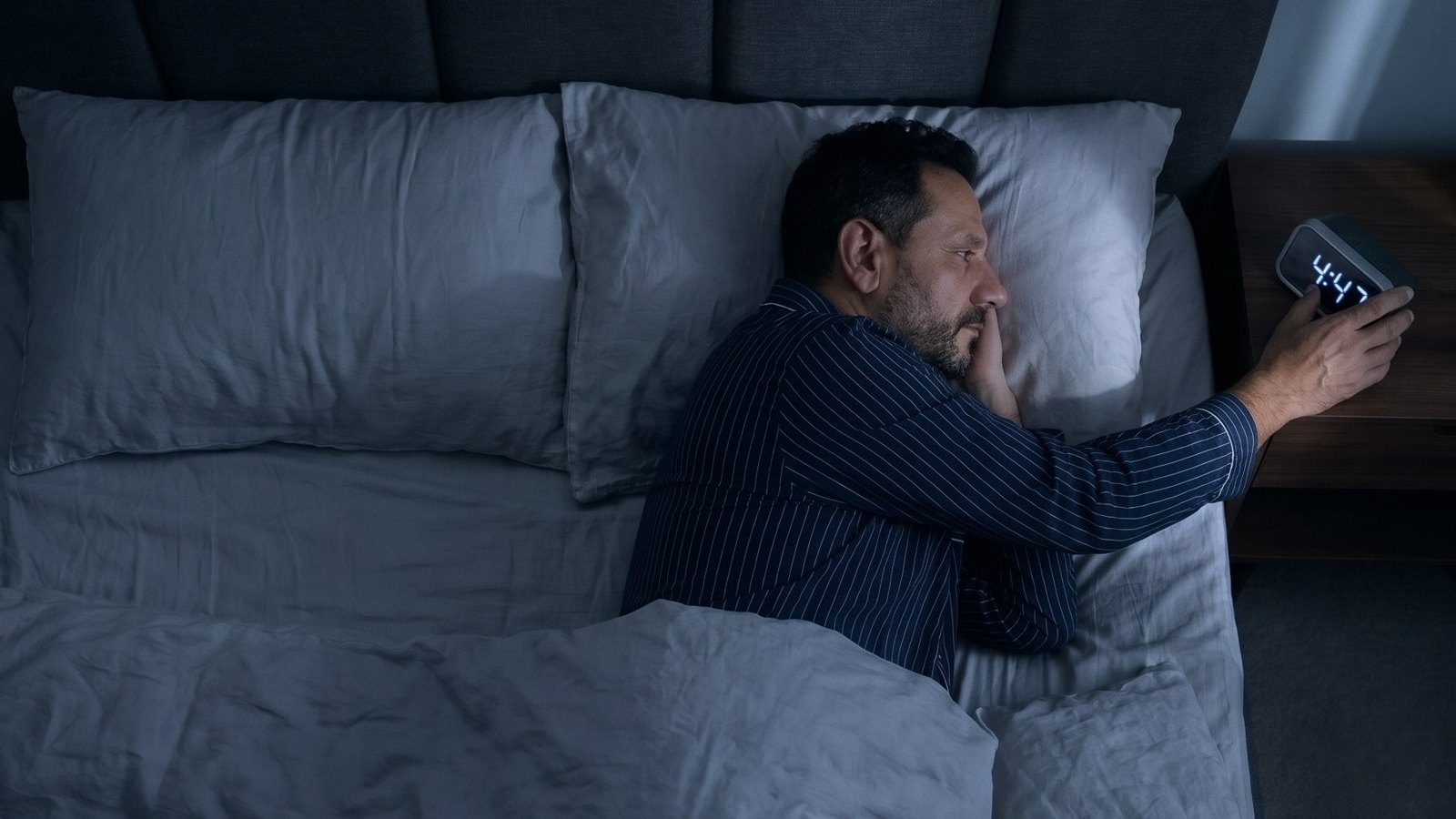
You turn over and check the time. 4:47am. Your mind is already making lists. Your body feels like it's morning. Sleep isn't coming back.
So you get up, make a coffee and watch the sky go from black to grey. It's quiet, and some mornings you even enjoy it.
By 3:00pm you're running on empty. By 9:00pm you can barely keep your eyes open, just as everyone else is sitting down to dinner.
Then the 10:00pm dinner. The birthday that starts at 11:00pm. The friends who want "one more". You leave first, again. Same thing tomorrow.
“Waking early isn't the problem. Waking before you're ready is.”
You've blamed stress. Getting older. The AC. The light through the curtains. Maybe you've decided you're just "a light sleeper" and that's how it is.
You've tried the tips too. Blackout curtains. An eye mask. No coffee after lunch. An early night to "catch up". Some of it helped a little. None of it lasted.
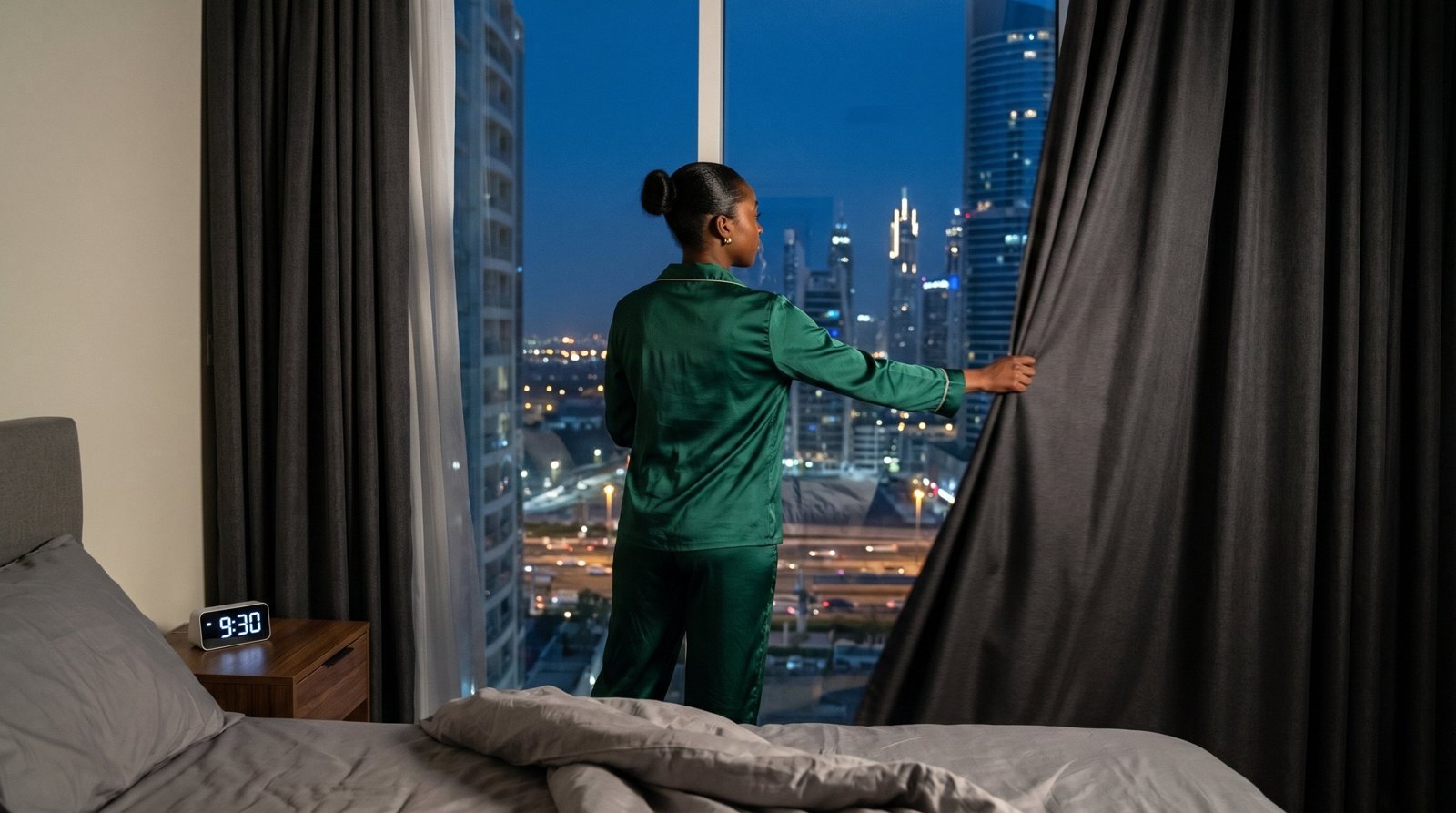
Maybe you went to bed at 8:30pm because you were exhausted, then woke at 3:30am feeling like it was morning. Maybe you stayed out late to keep up, and still woke at 5:00am with less sleep than ever.
Most sleep advice tells you to go to bed earlier. If your clock already runs early, that can make it worse. An early clock needs a different kind of help, often the opposite. Nobody told you that.
So you start to think the problem is you. It isn't.
Scientists call your personal setting on your body clock your chronotype. We've simplified the science into four Sleep Colours, and you'll meet them in a moment.
Deep in your brain, about 20,000 nerve cells keep time for your whole body. They decide when you feel sharp, when your temperature drops, and when you wake up.
It isn't a bad habit. In 2019, a study of nearly 700,000 people found 351 places in our DNA linked to chronotype. Your timing is partly written in your genes.
When researchers mapped the natural sleep times of tens of thousands of people, the earliest and latest sleepers were several hours apart. Same city. Same 24 hours. Very different clocks. Our clocks also tend to run earlier as we get older.
You might expect your body to let you sleep in after a late night. An early clock doesn't work that way.
In the last hours of the night, your body temperature starts to rise and your body releases its morning wake-up hormone, cortisol. On an early clock, this happens early, often between 4:00am and 5:30am. When it starts, your clock is calling time on the night, whatever time you went to bed.
A morning person's sleep on two different nights. Illustrative.
Go to bed two hours late, and an early clock still wakes you at 5:30am. You don't get a lie-in. You just lose two hours.
And the more tired you get, the earlier you fade the next evening. Go to bed earlier, and you wake up even earlier. The cycle tightens.
In the research, chronotype is a sliding scale full of scores and graphs. We've simplified it into four Sleep Colours, each a plain name for where your clock sits. Which one sounds like you?
The early clock. Up before the alarm, fading by 9:00pm, wonders how anyone enjoys a 10:00pm dinner.
In step with the sun. Strong mornings, a real dip around 3:00pm, asleep by 11:00pm without trying.
The late clock. Foggy until 11:00am, sharpest after dark, best ideas at midnight.
The light sleeper. The AC clicking or a car outside is enough to wake them. Tired but wired.
Typical 8-hour sleep window on a free day. Illustrative; your own window comes from your assessment.
It's more than an early start. When your body clock and your daily life are out of step, researchers call it social jet lag. You live in one time zone and your body lives in another.
Dinners at 10:00pm. Weddings that start at 9:00pm. Plans at midnight on the weekend. Your body clock wants to be asleep while everyone else is just getting going.

You know the result. Bright mornings, a crash in the afternoon, fading at dinner, and the feeling that life happens after you've gone to bed.
Till Roenneberg's team found most people carry at least an hour of social jet lag, and around a third carry two hours or more. For early clocks, it builds up at night: late dinners, late events, late weekends.
Day to day, you're the first to leave and you say no to plans you'd love to go to. You're sharp in the morning meeting, running on fumes by 4:00pm, and you spend Saturday recovering from Friday.
None of this means something is wrong with you. Your days and your clock are pulling in different directions.
Your genes set the starting point. Your day moves it, through light, caffeine, screens and timing.
The catch is that the right timing depends on your colour. Bright morning light is exactly what a Twilight needs. An early clock usually needs the opposite: more light in the evening, less at dawn. That's why general sleep tips fail.
Researchers at the University of Colorado took a group camping for a week with no electric light. Their body clocks moved about two hours earlier, which shows how strongly light sets the clock.
An Australian team gave people who woke too early bright light in the evening. Their body clocks moved later, and they slept longer in the morning. So the same light that keeps a night owl up too late can help an early clock hold on a little longer.
Four quick questions to see how big the gap is. This is a preview, not your full assessment.
We built The Method to do one thing: line up your days with the clock you actually have.
Nobody is asking you to become a night owl. A Sunrise will never be a Twilight. The plan finds a rhythm you can keep, and builds your day around it.
One payment · No subscription
Find my Sleep ColourTake the assessment right after you pay. Your Method arrives at the end.
That's what the detailed assessment is for. It shows where your clock sits. Then your Method tells you what to do with light, caffeine, screens and bedtime, week by week, for your colour.
No. Chronotype is the scientific term. Sleep Colour is our plain name for four bands of the chronotype spectrum, so you don't need a textbook to use it.
Partly. Body clocks tend to run earlier with age. But plenty of younger people have early clocks too, and the same levers help at any age.
Within limits. The studies above show light timing moving the clock by up to 2 hours. The plan uses those levers, a little at a time.
Yes. Your Method has a page on flights and time zones, written for your colour.
Straight after you pay, take the assessment on your phone. Your Method is ready to download at the end, with a copy by email.
No. If you wake very early and feel low most days, if you've had trouble sleeping three or more nights a week for three months, if you snore loudly or someone has noticed pauses in your breathing, or if you're sleepy all day no matter what, please see a doctor. This plan is lifestyle guidance, not medical care.
Tomorrow, the city will be dark and quiet again at 4:30am. You can lie there waiting for the alarm.
Or you can find out, tonight, what your clock has been trying to tell you.
This is an advertisement. It was written by My Sleep Fix to promote a My Sleep Fix product and is not an independent news article. The researchers and journals mentioned have no connection with My Sleep Fix and have not reviewed or endorsed this product.
Sleep Colour is an educational framework based on published chronotype research. It is not a medical test and does not diagnose any condition. My Sleep Fix is a lifestyle brand. Mysleepfix LLC is licensed in the UAE for health and lifestyle coaching and consultancy, not as a medical practice. Individual results vary.
Privacy Policy · Terms of Sale · info@mysleepfix.com · Mysleepfix LLC