Awake at 3am, again? You may just be a lighter sleeper than most.
Most people blame stress or the AC. Scientists have studied why some people wake more easily than others. We've made it simple with four Sleep Colours. Find yours and know what to do tonight.
M
By My Sleep Fix Journal 8-minute read
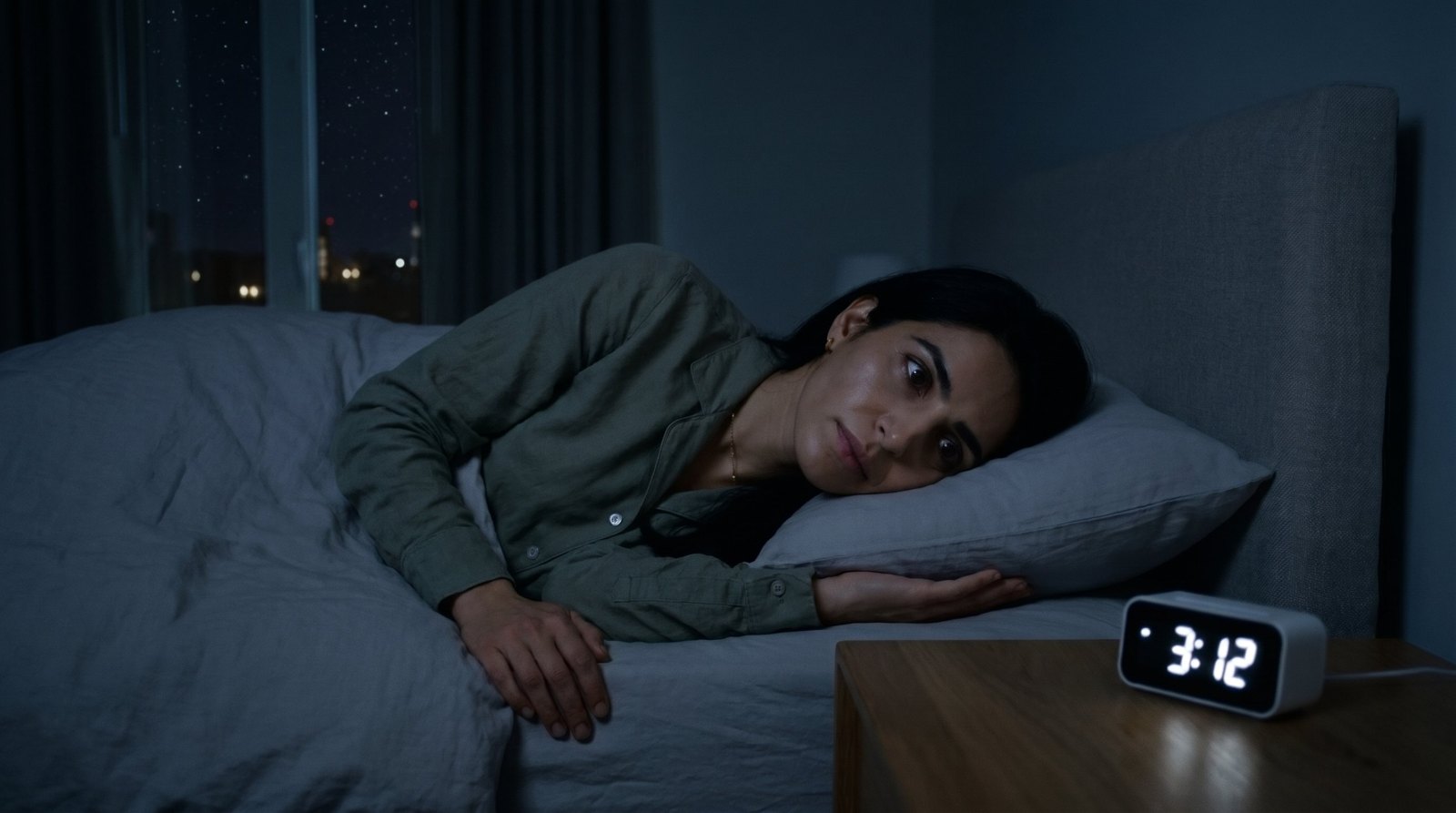
3:12am. Wide awake, again.
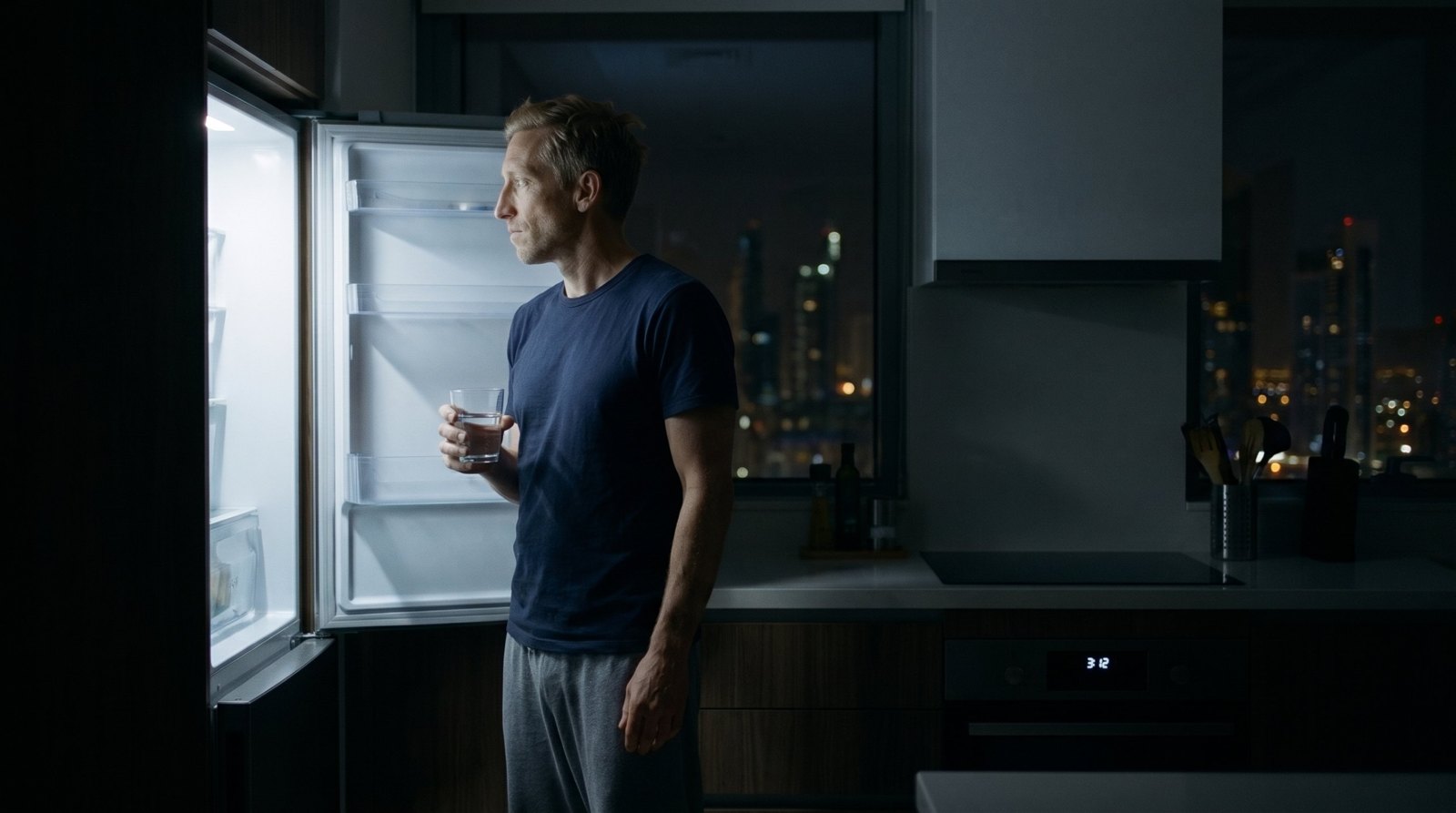
It's 3:12am. Your eyes open. Nothing happened. The AC clicked. A car went past. Your daughter turned over in the next room. That was enough.
You fell asleep fine at 11:00pm. Now you're lying in the dark, listening to every small sound in the house.
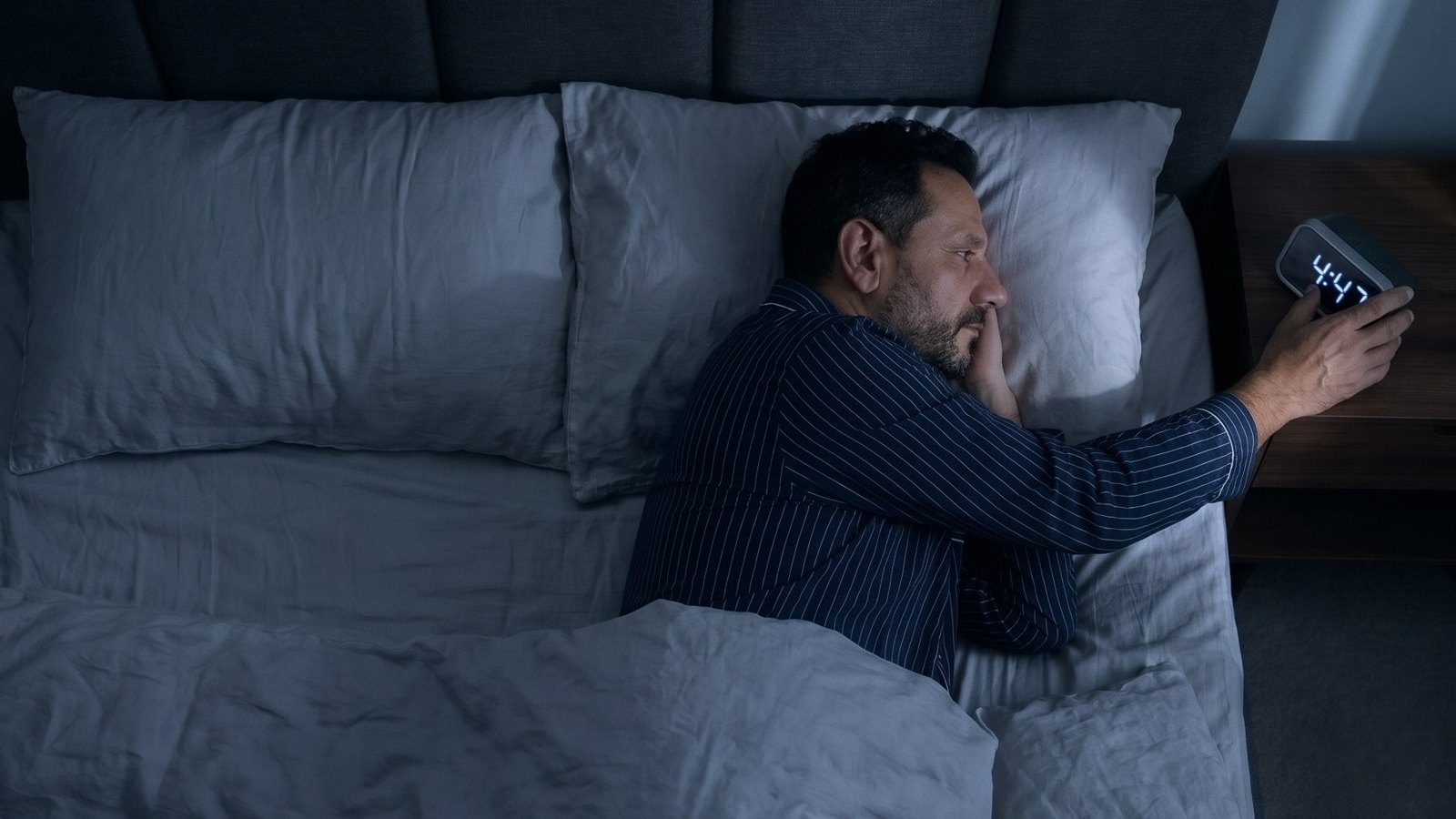
You check the time and wish you hadn't. If I fall back asleep now, I'll get three more hours. Two and a half.
Your mind wanders. The email you need to send. The school form you forgot to sign. Something that seemed small at 6:00pm feels huge at 3:00am.
Some nights you drift off again after twenty minutes. Some nights you're still awake when the sky turns grey. Either way, the 6:30am alarm finds you already tired. Same thing tomorrow.
“Falling asleep isn't the hard part. Staying asleep is.”
You've probably blamed yourself
You've blamed stress. The AC. Your partner's snoring. The kids. The late coffee. Maybe you've decided you're just "a light sleeper" and there's nothing to be done.
You've tried the tips anyway. Chamomile. No screens after 9:00pm. A white-noise app. Earplugs that fall out by 2:00am. Some of it helped a little. None of it lasted.
Maybe you went to bed earlier to "make up for it", and woke at 2:00am instead. Maybe you checked the clock every twenty minutes, which only made it worse.
Most sleep tips are about falling asleep. Your problem is staying asleep. A light sleeper needs help with the night itself: what wakes you, and what to do when it does. Nobody told you that.
So you start to think the problem is you. It isn't.
Your night isn't one long sleep
Scientists call your personal setting on your body clock your chronotype. It shapes when you sleep, and how your night unfolds. We've simplified the science into four Sleep Colours, and you'll meet them in a moment.
Sleep comes in cycles of roughly 90 minutes, four to six of them a night. Each one dips into deeper sleep and comes back up. Most deep sleep happens in the first half of the night. Towards morning, the cycles get lighter.
At the end of each cycle, everyone surfaces for a moment, close to waking. Most people turn over and never remember it. Some people notice. They are the ones who hear the AC click.
Why you wake up at 3am
By 3:00am, most of your deep sleep is behind you. What's left is lighter, and the gaps between cycles come closer to the surface.
For a light sleeper, a small sound in one of those gaps is all it takes. A brief wake-up becomes a wide-awake one.
A light sleeper's night
How deep sleep goes through the night. Illustrative.
The later the night, the lighter your sleep. That's why 3am is the hour you hear everything.
And once you check the time and start counting the hours, your brain switches on. That's what turns a moment into an hour.
The science, made simple: four Sleep Colours
In the research, chronotype is a sliding scale full of scores and graphs. We've simplified it into four Sleep Colours, each a plain name for where your clock sits. Which one sounds like you?
Sunrise
The early clock. Up before the alarm, fading by 9:00pm, wonders how anyone enjoys a 10:00pm dinner.
Daylight
In step with the sun. Strong mornings, a real dip around 3:00pm, asleep by 11:00pm without trying.
Twilight
The late clock. Foggy until 11:00am, sharpest after dark, best ideas at midnight.
Moonlight
The light sleeper. The AC clicking or a car outside is enough to wake them. Tired but wired.
What a 10:30pm lights-out does to each colour
Typical 8-hour sleep window on a free day. Illustrative; your own window comes from your assessment.
What it costs you
It's more than one broken night. Broken sleep feels different from short sleep. You can spend eight hours in bed and still wake up feeling like you barely slept.
The AC cycling on and off. Deliveries at midnight. A neighbour's door. A child calling out. A partner's early alarm. Every one of them lands in your night.
You know the result. Heavy mornings, a fog that lasts until lunch, a short temper by evening, and a quiet dread of bedtime.
A Johns Hopkins team compared people whose sleep was broken up through the night with people who simply went to bed later and slept the same amount. After a few nights, the broken-sleep group's good mood dropped the most.
Day to day, you read the same email three times and snap at the people you love. You rely on coffee to get through the afternoon, which makes the next night lighter still.
None of this means something is wrong with you. Your nights need a different kind of help.
Your nights can get calmer
Light sleepers can sleep more soundly, with a steady wake-up time, light at the right moments, caffeine timing, a proper wind-down, and the room itself.
The catch is that the right timing depends on your colour. And what you do in the first minutes after you wake matters as much as anything you do before bed. That's why general sleep tips fail.
Caffeine stays in the body for hours. In one study, a coffee's worth of caffeine taken six hours before bed still cut sleep by more than an hour.
A steady wake-up time, even on weekends, helps keep the whole night on schedule. And keeping the clock out of sight at night stops the counting that turns a brief wake-up into a long one.
How broken are your nights?
Four quick questions to see how settled your nights are. This is a preview, not your full assessment.
We built The Method to do one thing: line up your days and nights with the clock you actually have.
Take your detailed assessment.Right after you pay, on your phone. It looks at when you sleep, wake and feel sharp, and how often your nights are broken, the way sleep researchers do.
Get your Sleep Colour and your Method.20 pages written for your colour, ready to download at the end.
Follow it for 28 days.When to get light, stop caffeine, set up your room and wind down. And exactly what to do when you wake at 3:00am, so a few minutes stay a few minutes.
Nobody is promising you'll never wake again. Everyone does. The plan helps you wake less, and fall back asleep faster when you do.
Take the assessment right after you pay. Your Method arrives at the end.
Don't know where to start? First, find your Sleep Colour.
That's what the detailed assessment is for. It shows where your clock sits and how you sleep. Then your Method tells you what to do with light, caffeine, your room and your nights, week by week, for your colour.
Questions people ask
Is waking in the night normal?
Yes. Everyone surfaces briefly between sleep cycles. It becomes a problem when the wake-ups are long, frequent, or leave you tired the next day.
Is "Sleep Colour" a scientific term?
No. Chronotype is the scientific term. Sleep Colour is our plain name for four bands of the chronotype spectrum, so you don't need a textbook to use it.
What should I do when I wake at 3am?
Your plan covers this step by step. The short version: don't check the time, keep the lights low, and don't lie there fighting it for hours.
I travel a lot. Will it still work?
Yes. Your Method has a page on flights and time zones, written for your colour.
How do I get it?
Straight after you pay, take the assessment on your phone. Your Method is ready to download at the end, with a copy by email.
Is this for sleep disorders?
No. If you wake gasping or choking, snore loudly or someone has noticed pauses in your breathing, have trouble sleeping three or more nights a week for three months, or feel low most days, please see a doctor. This plan is lifestyle guidance, not medical care.
Before the lights go out
Tonight, somewhere around 3:00am, the house will make a small sound again. You can lie there counting the hours.
Or you can find out, before bed, what your nights have been trying to tell you.
This is an advertisement. It was written by My Sleep Fix to promote a My Sleep Fix product and is not an independent news article. The researchers and journals mentioned have no connection with My Sleep Fix and have not reviewed or endorsed this product.
Sleep Colour is an educational framework based on published chronotype research. It is not a medical test and does not diagnose any condition. My Sleep Fix is a lifestyle brand. Mysleepfix LLC is licensed in the UAE for health and lifestyle coaching and consultancy, not as a medical practice. Individual results vary.